AC Not Blowing Cold Air? 5 Common Causes & How to Fix

Troubleshooting Why Your Air Conditioner Isn’t Working
In Florida, an air conditioning unit that works (and works well) is non-negotiable. Summer temperatures regularly climb past 90 degrees, and the heat index can easily push into the triple digits. While central A/C systems may last 15 to 20 years in many parts of the U.S., in Florida, that lifespan is often closer to 10 to 12 years because units run harder and longer in the heat and humidity. Given these conditions, replacing your unit might be a worthwhile consideration, especially if you’re facing frequent repairs.
If your air conditioner isn’t working properly, there could be a number of culprits at the root of the problem. In this article, we’ll discuss the top five most common reasons why your air conditioner isn’t blowing cold air anymore.
5 Reasons Your AC is Blowing Warm Air
Common Cause #1: A/C Unit’s Refrigerant Line Leaks (Low Refrigerant Levels)
Refrigerant is the fluid your A/C unit uses to remove heat and humidity from the air inside your home. This process can go awry when the system develops a leak in its refrigerant lines, AKA literal holes in the lines. When this happens, it can cause your unit to run out of resources (the refrigerant) to effectively cool the air in your home, causing your air conditioner to blow much warmer air.
In most cases, you’ll find the refrigerant leak is coming from the evaporator coil (the indoor part of the unit). You’ll want to check both the outdoor condenser unit and the indoor unit to accurately detect the source of the leak.
| Method | How it Works |
| Soapy water test | Apply soapy water to the suspected refrigerant-leak area. If bubbles form, that can help expose the location of the leak. |
| Ultraviolet dye spray | Because refrigerant contains dye, you can use ultraviolet dye spray and a blacklight to look for fluorescent marks that may indicate a leak. |
| Electronic leak detector | An electronic leak detector can quickly identify chlorine or fluorine ions that may signal a refrigerant leak. |
Common Cause #2: Frozen Evaporator Coils (Check for Ice Buildup)
Your A/C evaporator coils need steady airflow and enough warm indoor air moving across them to work properly. When airflow is restricted or the system gets too cold, moisture on the coils can freeze, creating ice buildup that prevents your air conditioner from cooling effectively. As the ice builds, airflow drops even more, which can make the problem worse.
Common symptoms:
- Visible ice or frost on the copper lines or evaporator coil
- Weak airflow from the vents, even when the fan is set to high
- Excessive condensation, water around the unit or a full drain pan as the ice melts
If your A/C evaporator coils have frozen over, there are a few common places where you may notice ice buildup, excess moisture or drainage issues:
- Condensation or moisture around the indoor air handler
- Ice around the outdoor condenser near the refrigerant line
- A drain pan that is full or overflowing
- Ice or condensation on the indoor evaporator coil
| Step | How it Works |
| Turn off the thermostat. | Shutting the system off stops cold air production and gives the frozen evaporator coil time to thaw. |
| Switch the fan setting on. | Running the fan helps circulate air through the system while the coil defrosts. |
| Replace a dirty air filter. | A clogged filter can restrict airflow, which may contribute to frozen evaporator coils. Replacing it can help restore proper airflow. |
Common Cause #3: Dirty Condenser Coils (Outdoor Unit Maintenance)
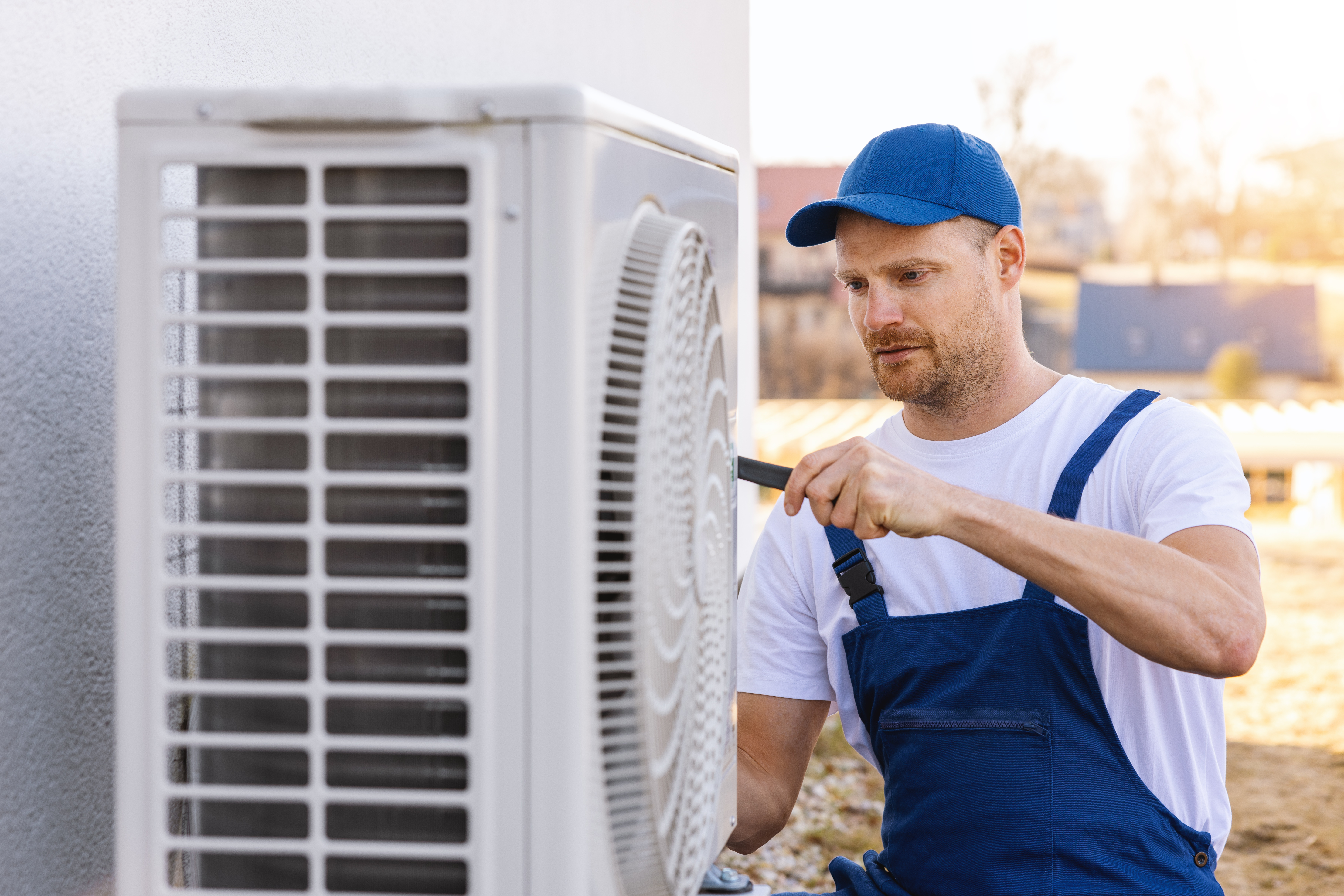
Condenser coils are located on the outdoor part of your A/C unit and help release the heat pulled from inside your home. When those coils are covered in dirt, dust or debris, your system can’t release heat as efficiently. That forces your air conditioner to work harder, reduces cooling performance, raises energy use and can add extra wear and tear over time.
Common symptoms:
- Hot outdoor air from the top of the outdoor unit that feels cool or lukewarm instead of very hot
- Frequent system short-cycling, with the A/C turning on and off every few minutes
- Higher utility bills as the unit works harder to release heat
In most cases, you can spot dirty condenser coils by checking the outdoor unit for visible dirt, dust, leaves or other debris blocking the coils. If the outside of the unit looks dirty or clogged, the condenser coils may need to be cleaned.
| Method | How it Works |
| Clean the condenser coils regularly. | Routine cleaning helps remove dirt and debris that can block heat transfer and reduce cooling efficiency. |
| Check whether the issue improves after cleaning. | If the coils were the main problem, cleaning them may help restore better cooling performance and reduce strain on the system. |
| Contact a professional if the problem continues. | If cleaning the condenser coils doesn’t solve the issue, the unit may need professional service to diagnose other underlying problems. |
Common Cause #4: Leaking Air Ducts (Losing Cool Air in the Attic)
If your air conditioner is running but your home still isn’t getting cool, leaking air ducts may be part of the problem. Your ductwork carries cooled air through the walls, ceilings and floors of your home, but if there are gaps or loose connections, that air can escape before it ever reaches your living spaces. This can make it seem like your A/C is working even though much of the cool air is being lost along the way.
Common symptoms:
- Uneven cooling, such as one room feeling freezing while another stays warm
- Excessive dust around vents as leaks pull in dirty air from the attic or crawlspace
- Noisy vents, including whistling or flapping sounds behind walls or in the ceiling
In most cases, you’ll want to locate the air ducts running through your ceilings, floors, or walls and check for obvious gaps, loose connections, or disconnections. Leaks are often found where duct sections join together or where seals have worn out over time.
If you find gaps or disconnections in your ductwork, you’ll likely need a professional to repair and properly seal the ducts.
Common Cause #5: Broken Condenser Fan (Outdoor Unit Isn’t Spinning)
Your air conditioner may still sound like it’s running, but if the outdoor condenser fan isn’t spinning, the system won’t be able to release heat properly. In many cases, the issue is tied to a failed capacitor or fan motor. Since the capacitor helps start and power the motor, a malfunction can keep the fan blades from moving and prevent your A/C from blowing cold air.
Common symptoms:
- Silence outside, even though you can hear the indoor unit humming
- A loud humming or clicking sound, but the fan blades don’t move
- The A/C trips the breaker frequently
If the outdoor unit isn’t spinning, check the condenser fan and listen for signs that the system is trying to start. In many cases, the issue may be connected to the capacitor or fan motor inside the outdoor unit. You’ll likely need a professional to inspect and make the repair safely.
Repair or Replace? Take the Quiz
While there are several possible causes as to why your air conditioner isn’t blowing cold air, these are some of the most common culprits.
If you’re experiencing issues with your A/C unit, take our quiz to find out if you’ll need a professional repair, a complete replacement or just a simple do-it-yourself fix. And if you’re facing a full replacement or professional repair, Florida PACE may be a good option to help finance it.
When you opt for a PACE-certified funding plan, you can confidently finance this type of home improvement repair that sets you up for success now and in the future. No money down, no minimum credit score required and no pressuring you into something you don’t feel 100 percent about.
Take our quiz today to assess your A/C unit and see what next steps might be best for you.

Frequently Asked Questions About AC Units
1. Why is my AC running but not cooling the house?
If your A/C is running but not cooling your home, start with the basics. A dirty air filter can restrict airflow, and incorrect thermostat settings can prevent the system from cooling properly. If those look fine, the issue could be related to frozen coils, leaking ducts, low refrigerant or another mechanical problem.
2. How much does it cost to fix an AC that’s not blowing cold air?
The cost to fix an A/C that isn’t blowing cold air depends on the cause. A simple fix like replacing a filter may cost very little, while larger repairs or a full system replacement can be much more expensive. If your repair turns into a bigger home improvement project, Florida PACE financing may help eligible homeowners spread out the cost over time.
3. Can I fix my AC myself?
Some A/C issues can be handled yourself, like checking the thermostat, replacing a dirty air filter, or clearing visible debris around the outdoor unit. But more serious problems — such as refrigerant leaks, electrical issues, frozen coils that keep returning or a broken fan motor — are better left to a licensed HVAC professional.